This industry-supported research effort is applying a data-driven approach to develop facade design guidance for high-rise residential development in India’s National Capital Region. The focus is on achieving sustainable outcomes while mitigating the effects of seasonal air pollution.
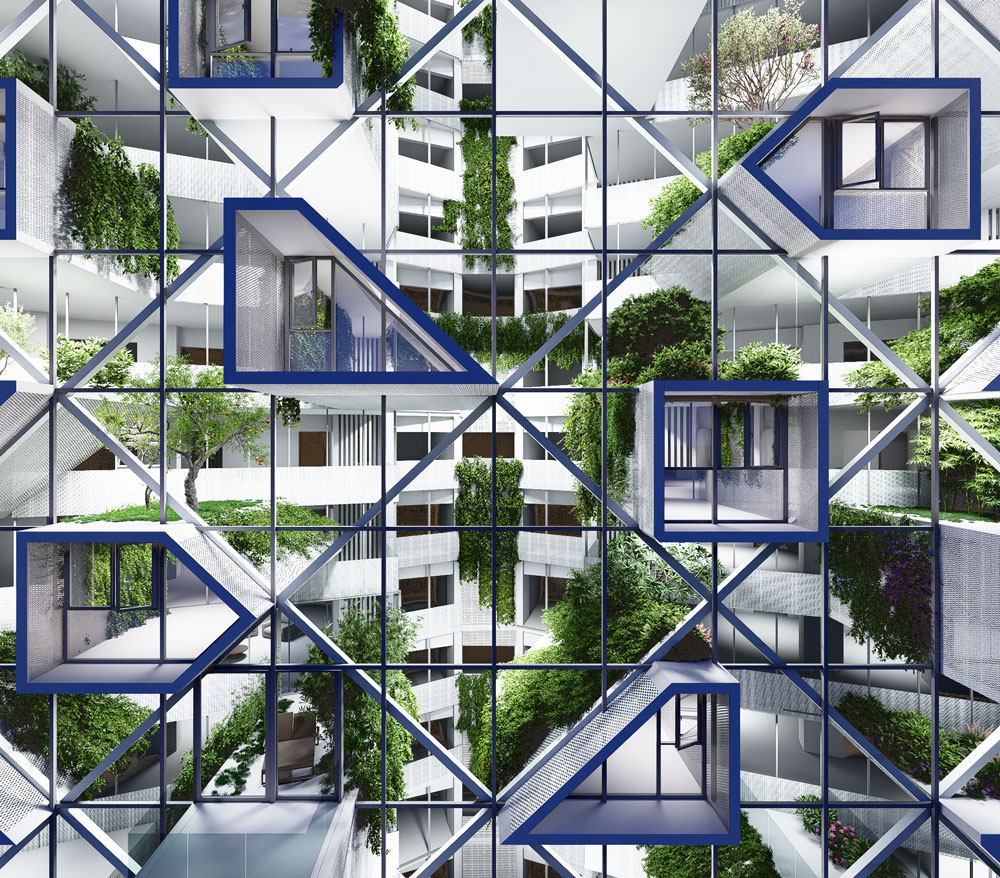
India’s National Capital Region (NCR) presents a demanding design problem: residential buildings must perform against extreme heat, monsoon humidity, and seasonal particulate air pollution simultaneously, often within the same day. The facade is the primary mediator between these exterior conditions and the wellness of occupants.
We applied a statistical approach to portfolio assessment, building from our experience in urban design modeling, simulating a wide range of synthetic variations on the developer’s existing and planned buildings. This assessment allowed us to benchmark the portfolio and highlighting the most impactful design strategies for sustainability and occupant health goals.
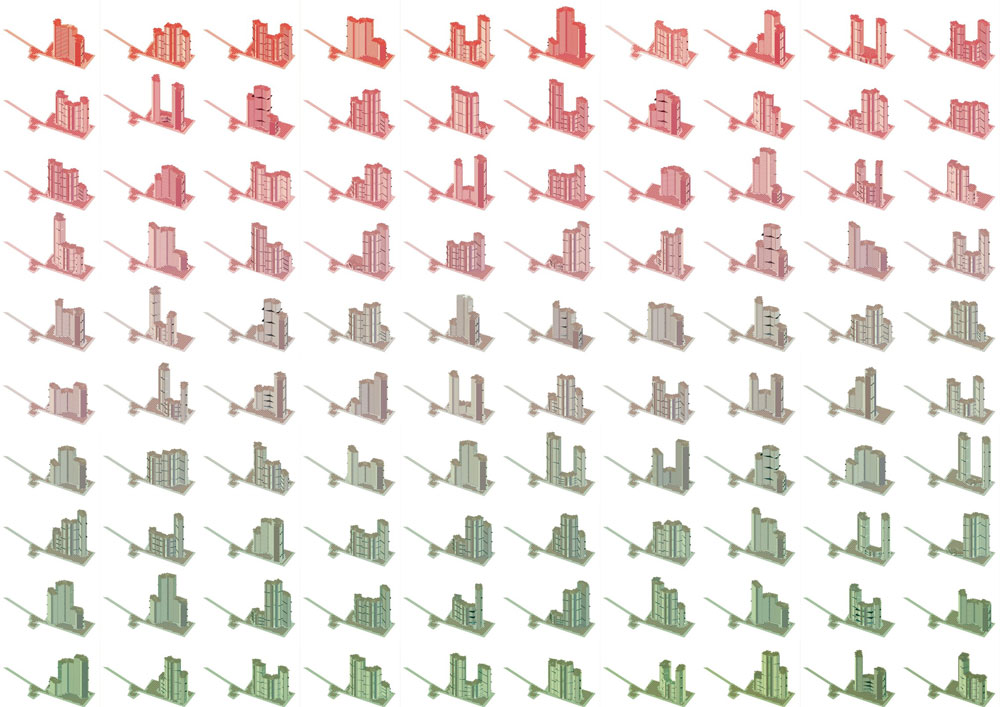
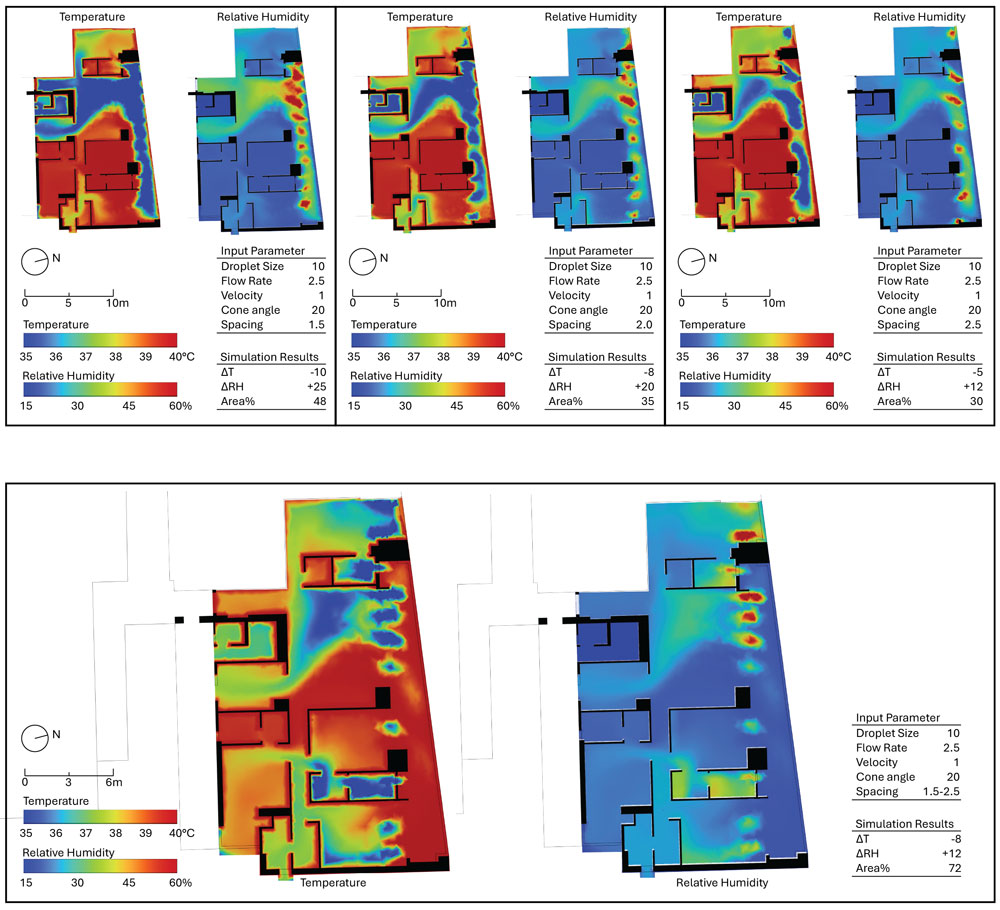
The year long study began with an assessment of building energy and liveability metrics via a random sampling of synthetic variants on the partner’s portfolio (above). Best results for whole life carbon were investigated with multi-objective optimisation. Natural ventilation and air quality assessment was completed subsequently with a grid search across design variants that included monsoon windows, misting and air filtration.
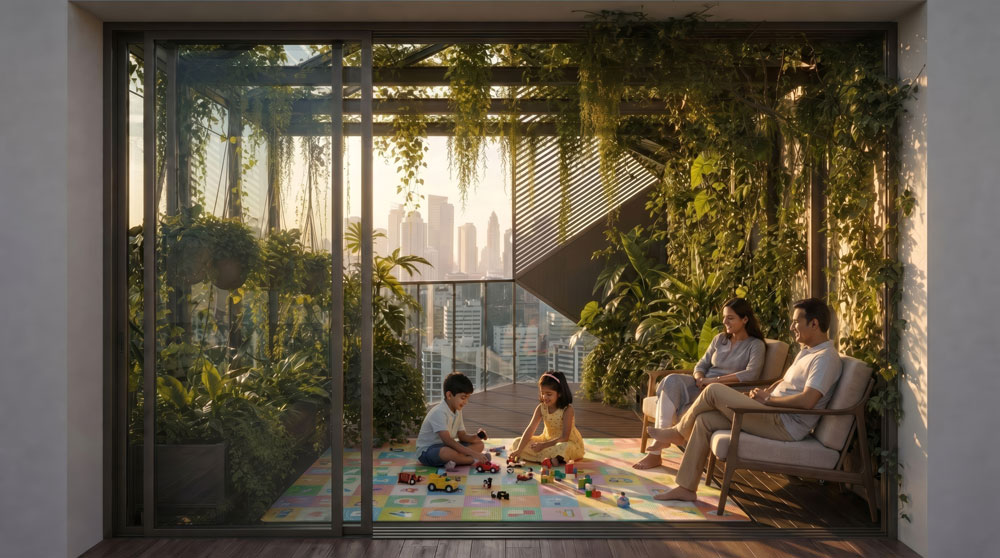
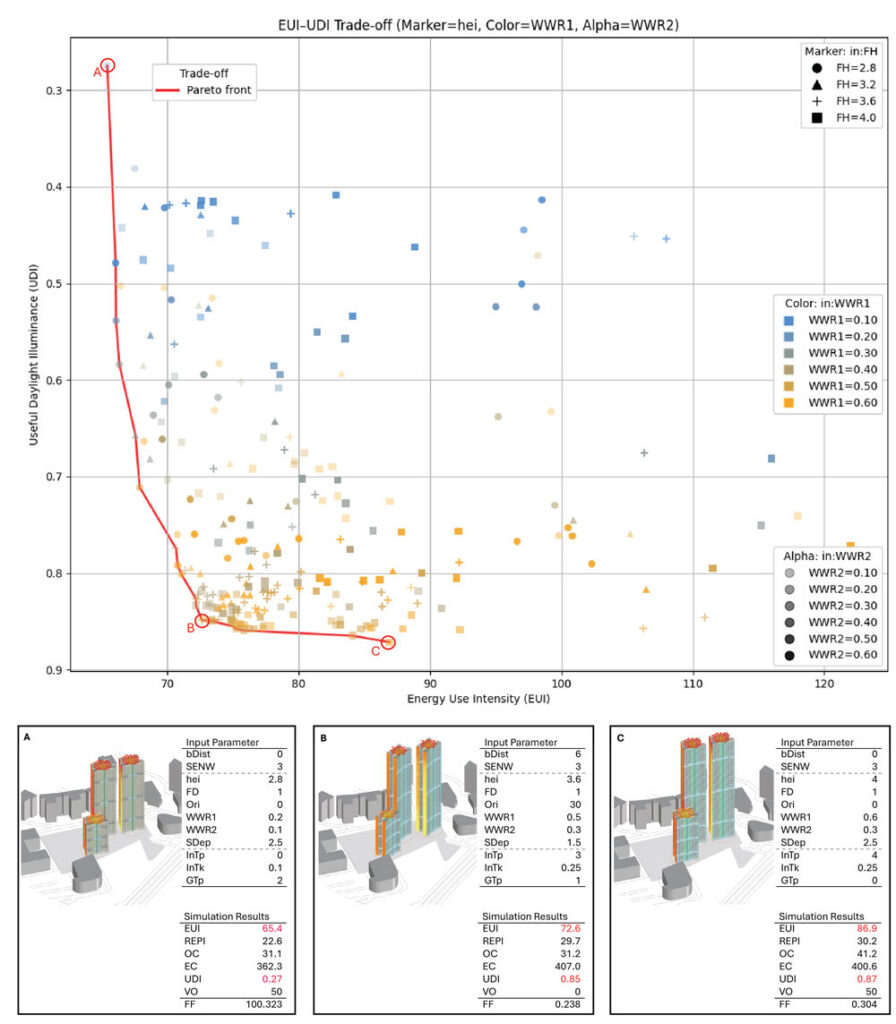
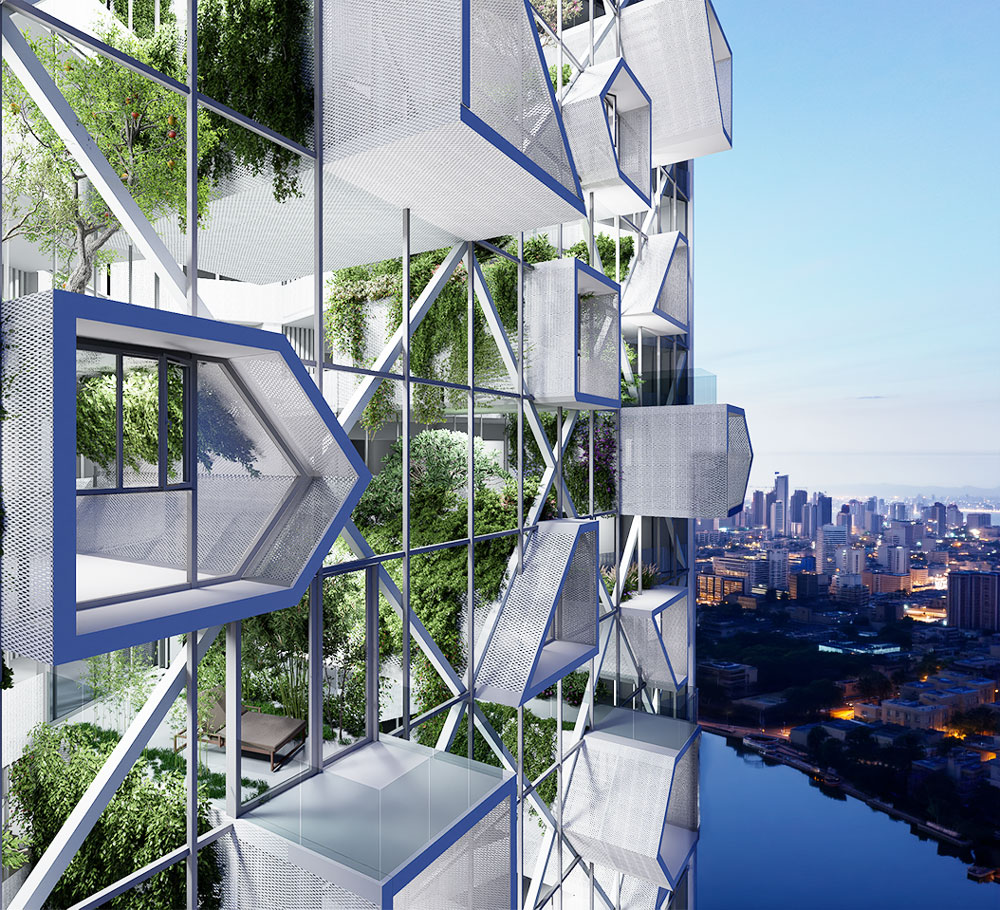
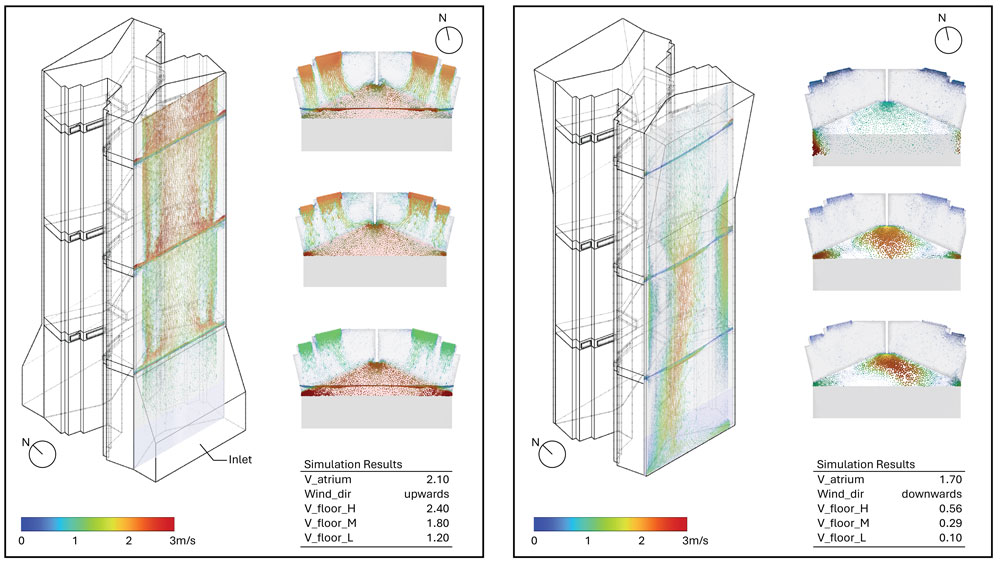
Ventilation simulation was used extensively to judge facade performance and distinguish between related design strategies including double-skin facades.
The research builds from the computational design methods developed in the Adaptive Design Lab’s , Net Zero Futures Lab research for urban and building scale performance simulation and optimisation, and applies them to the specific material, climatic, and regulatory constraints of the NCR.
Workshops and Exchanges between Singapore and Gurugram
In August 2025, the ADL staff held a three day workshop with EDPL in Gurugram including visits to active construction sites and facade material suppliers, and a discussion on sustainability strategy with the chair of India’s GRIHA green building certification agency.
In February 2026 key EPDL staff joined us in Singapore for a three-day workshop on parametric modelling and building simulation workflows, with sessions structured around live analysis of their planned residential projects.
Project Details Title: Advanced Façade Systems for Sustainability and Wellness
Duration: 2025–2026
Location: Gurugram and New Delhi, India (National Capital Region)
Partner institutions: Experion Development Ltd (EPDL), AT Capital
Citation Research outputs forthcoming. (World Cities Summit 2026 and ASIM 2026)
Acknowledgements Principal Investigator: F. Peter Ortner. Research Team: Li Junyi, Praveen Govindarajan, Sezgi Yalcinkaya. This research was support by Experion Development Ltd (Gurugram, India) and AT Capital.